 Google
 Facebook
The Dynamics of Demolition of Kagawa Prefectural Gymnasium








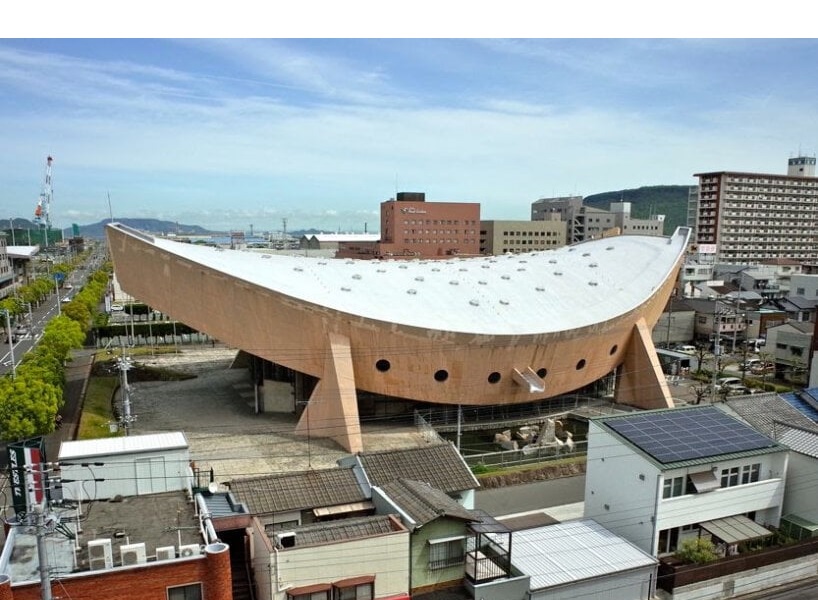
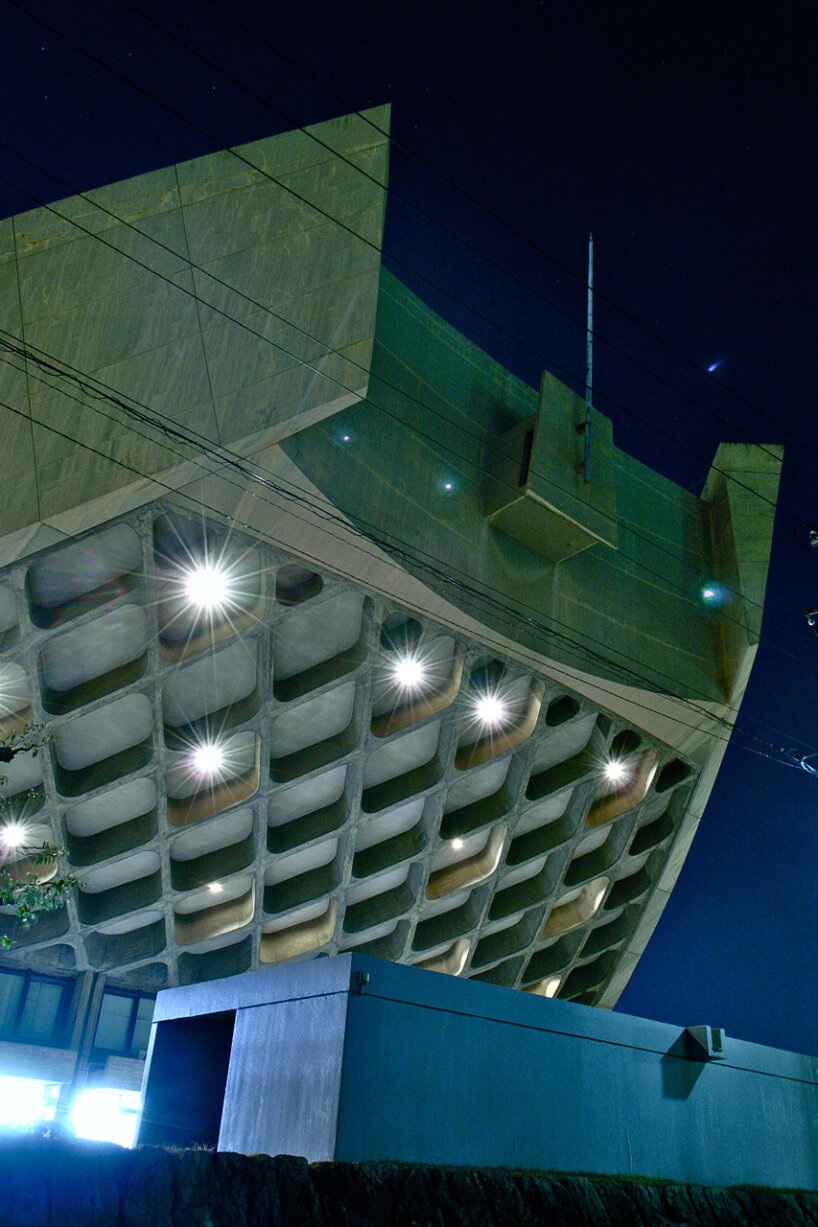
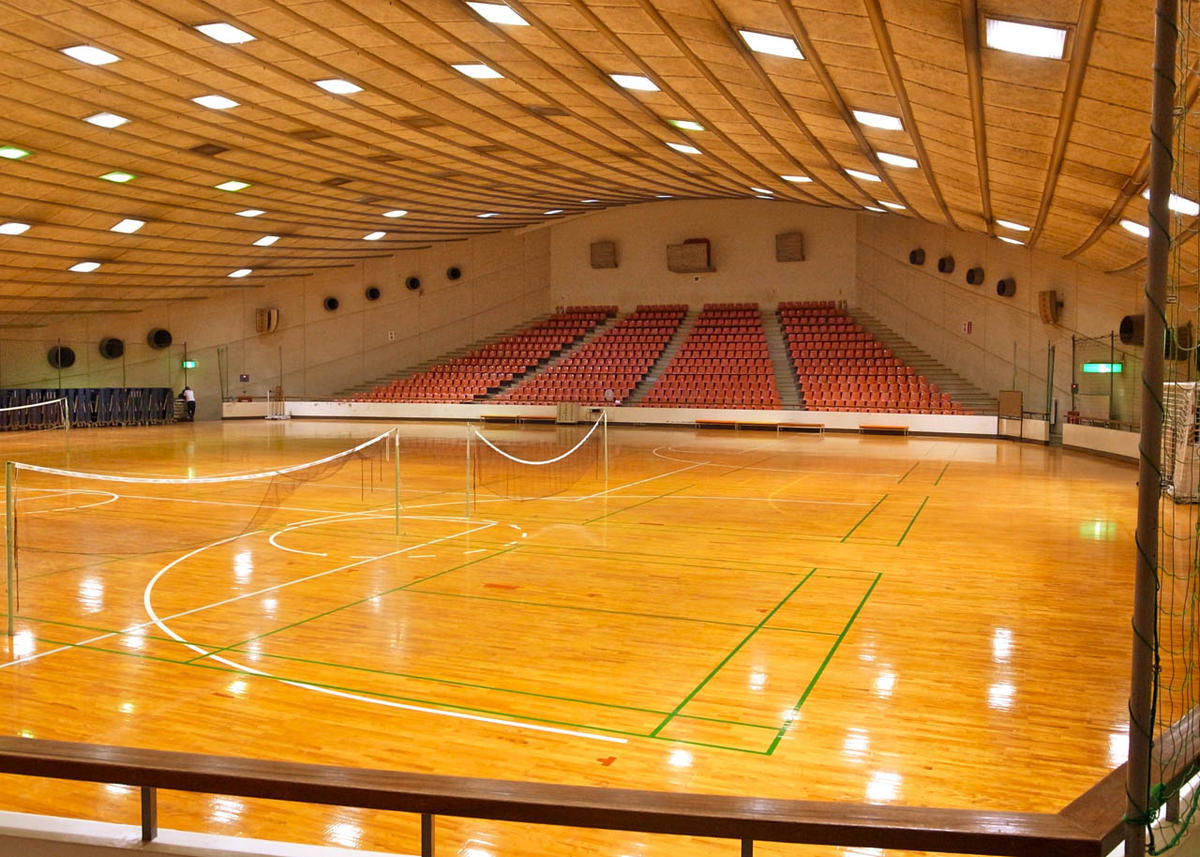
The demolition of the Kagawa Prefectural Gymnasium by the government authorities of Takamatsu, Japan, was discussed again some time ago. Built in 1961-1964 by Pritzker Prize winner Kenzo Tange, the building has hosted local sporting events in Takamatsu for approximately 50 years. Kagawa Prefectural Gymnasium closed in 2014 due to the age factor of the building. In addition, restoration was carried out to add seismic retrofits and repair leaks in the roof of the building caused by rusty support cables. Unfortunately, this restoration has not gone smoothly because the renovation costs are large enough that until now no investor has dared to bear it.
Bird view Kagawa Prefectural Gymnasium, Photo by Noriyuki Kawanishi
Many efforts were made to save the building that represented Japan's modernist era of post-war brutalism. As in 2018, Kagawa Prefectural Gymnasium is included in one of eight sites worldwide funded by American Express for its preservation. A movement from the World Monuments Fund (WMF) in 2019 initiated the community to reject the Demolition of the Kagawa Prefectural Gymnasium.
In addition, in 2020, the World Monuments Fund (WWF) in collaboration with Japan's National Archives of Modern Architecture, organized an exhibition in Tokyo during the 2020 Olympics entitled Tange Kenzo 1938-1970, From Pre War period to the Olympic Games and World Expo. The exhibition features the work of architects and the Kagawa Prefectural Gymnasium as beloved landmarks. Furthermore, in 2021, the Kagawa Prefectural Gymnasium building became part of a promotional council that sought to claim it as a UNESCO World Cultural Heritage site. However, until now, no one has been willing to be responsible for bearing the cost of this renovation.
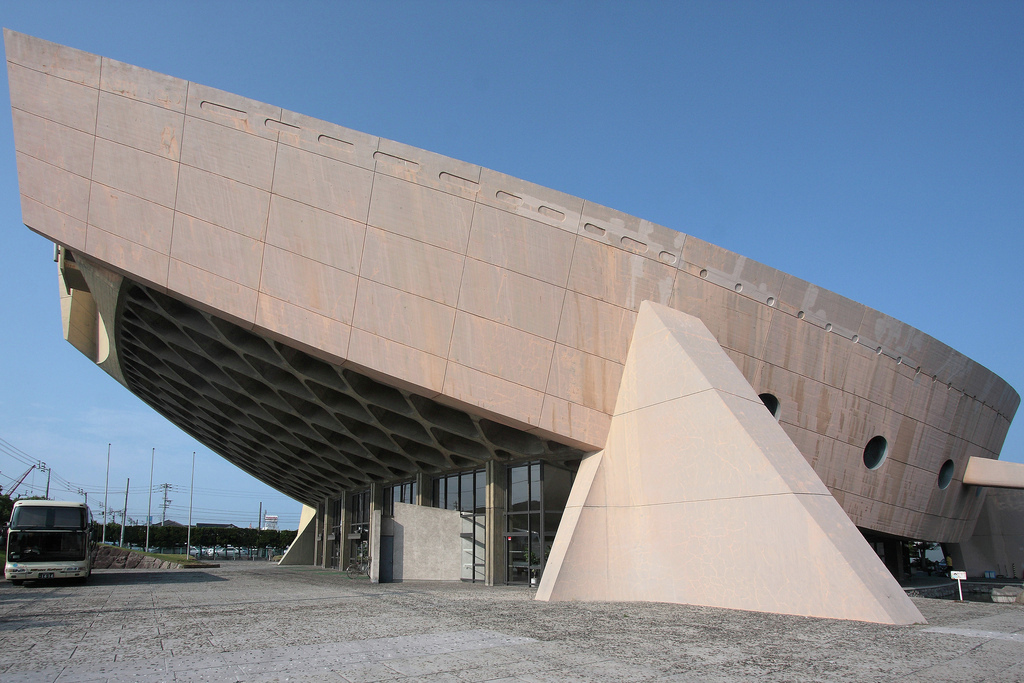
Front view Kagawa Prefectural Gymnasium, Photo by Noriyuki Kawanishi
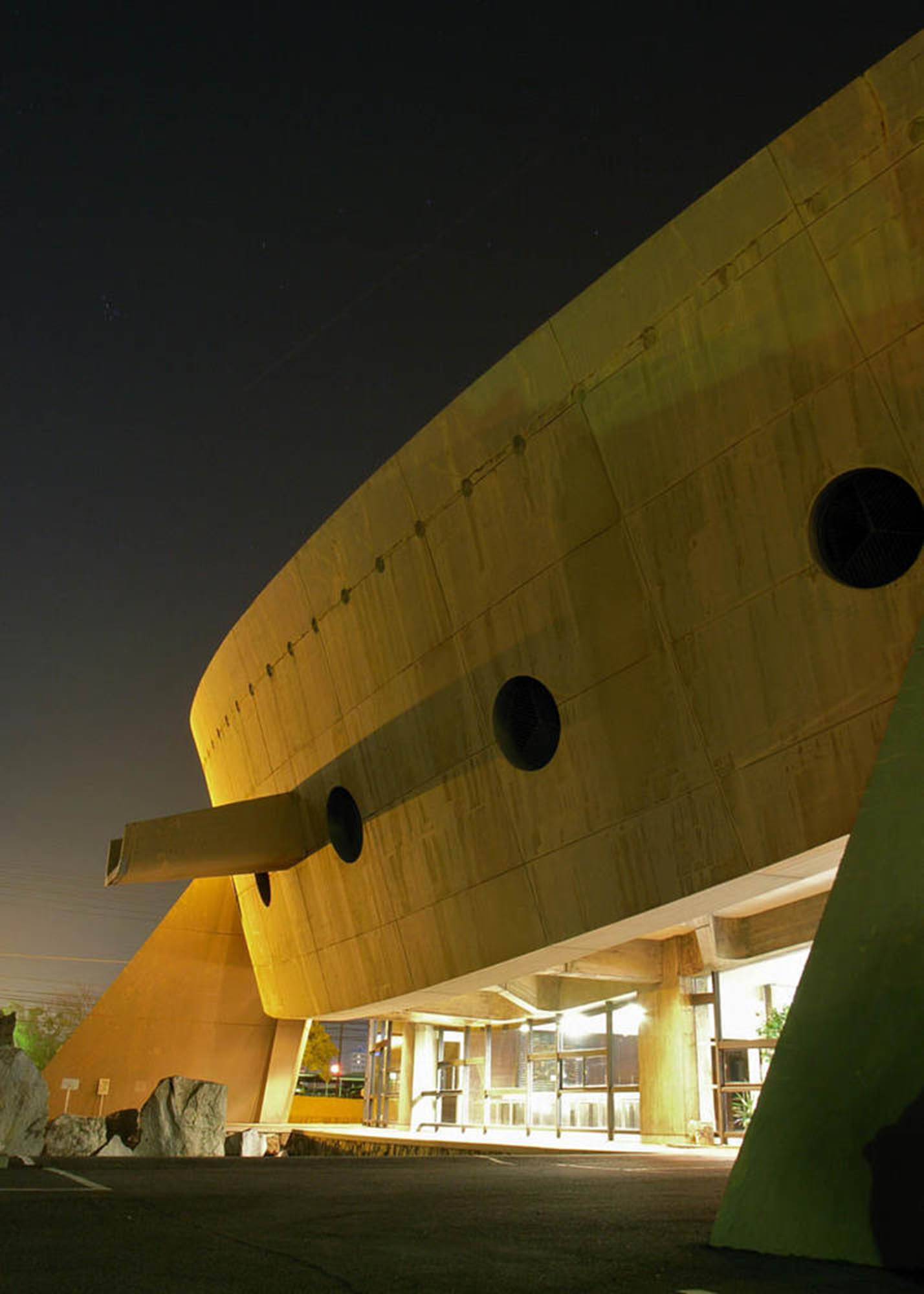
Kenzo Tange was one of the architects who flourished during the time of brutalism. Some of his works included Kagawa Prefectural Gymnasium. This brutalism building uses modern materials to represent traditional Japanese wooden boats, while an athlete's body shape inspires its dramatic curves. Kenzo Tange also combines Western modernism and traditional Japanese architecture in his concept. The main structure is a concrete ring at the core of the building, four large supports on all sides, and a thin concrete slab roof supported by suspension cables.
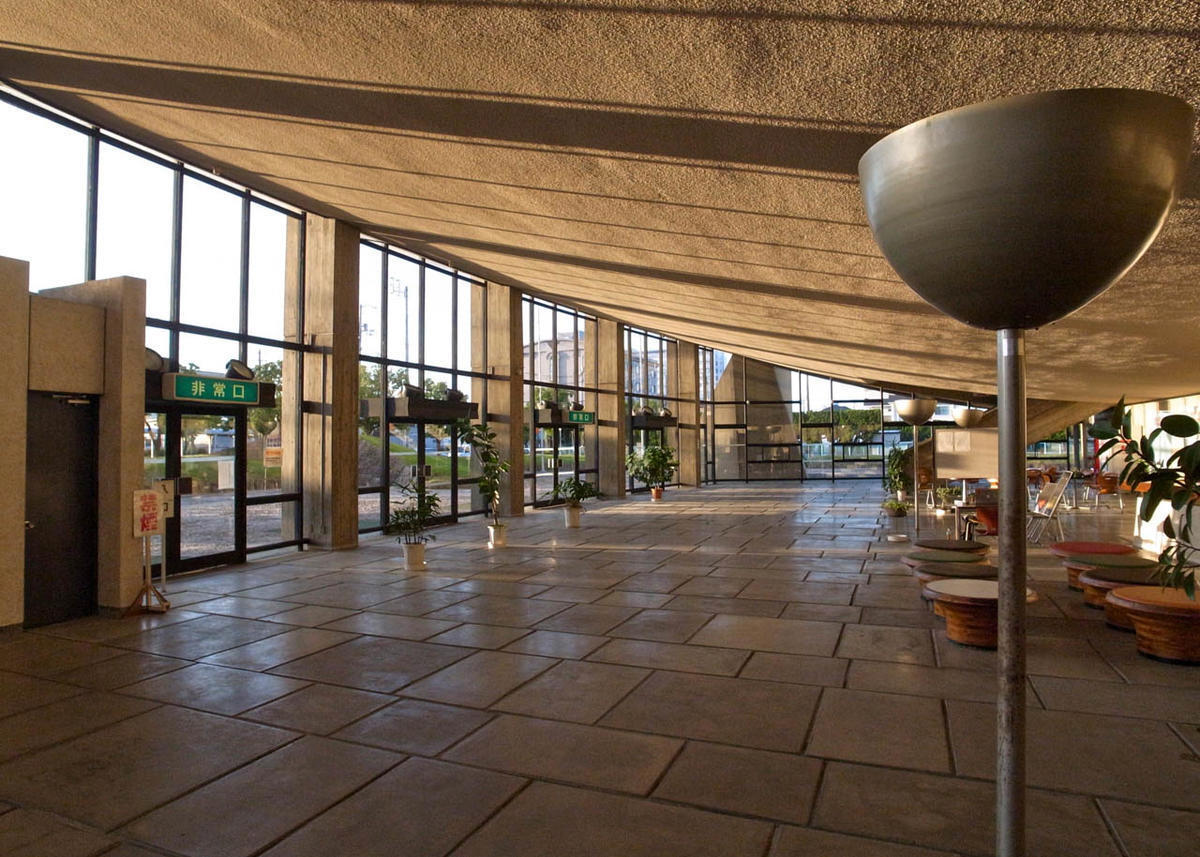
Entrans interior Prefectural Gymnasium, Photo by Noriyuki Kawanishi
Because the government announced the restoration of the Kagawa Prefectural Gymnasium some time ago, the local architectural community then launched a petition to campaign for the preservation of this building. In addition, local activists and international supporters argue that the Kagawa Prefectural Gymnasium building is an architectural heritage worthy of preservation and inheritance.
Front view Kagawa Prefectural Gymnasium, Photo by Noriyuki Kawanishi
However, this government decision also drew various comments on several fronts, one of which was criticism by architectural critics for neglecting the importance of the built environment for the daily activities of city dwellers. According to one activist and local architect, Noriyuki Kawanish, the destruction of this iconic building will make cities in Japan "lose their appeal". Moreover, many historical buildings were demolished some time ago due to age factors, such as the Nakagin Capsule Tower. Furthermore, the dormitory complex at the Indian Institute of Management, designed by Louis Khan in 1971 in India, was also recently announced to be demolished. Furthermore, the pyramid Restaurant Pavilion, designed by Gyo Obata as a complementary building of the National Aerospace and Space Museum, has also been torn down. Several other buildings are scattered in various parts of the world.
Hall interior Kagawa Prefectural Gymnasium, Photo by Noriyuki Kawanishi









Authentication required
You must log in to post a comment.
Log in